Africans march in Brussels against 50 years of neocolonial rule in Congo
By Luwezi Kinshasa, Secretary General of the ASI
Published Aug 3, 2010
BRUSSELS — On June 30, 2010, Congolese nationals based in France, Belgium, Germany, Sweden and Switzerland, along with African individuals from Jamaica, Ivory Coast and Martinique, descended on Brussels, the Belgian capital, to demonstrate against the celebration of 50 years of Congo flag independence, the celebration of which was marked by the presence of the current Belgian king, Albert IV, in Kinshasa, Congo.
This demonstration was called by Richard Lumumba, a nephew of the former prime minister Patrice Lumumba, in association with Congolese activists based in Belgium such as Henry Muke and Congolese organizations based in Belgium. The African Socialist International’s (ASI) influence on Richard Lumumba can be seen in the t-shirts he printed for this march that say “ASI, Européen Front de la Révolution Africaine” (ASI, European Front of the African Revolution).
The announcement that King Albert IV of Belgium would participate in the ceremony of the 50th anniversary of the declaration of Congo’s independence in Kinshasa created a fierce debate amongst the Africans from Congo inside and outside the country. This debate is part of the general discussion taking place around the “Cinquantenaire of African independence” or “50 years of African independence” in Africa and around the world.
The rally started modestly with about 100 people gathering around 1:00pm. The crowd swelled gradually over the next hour. By the time we were marching, two hours later, we were at least 1,000 strong. Our numbers made the police nervous. Some people, sensing the power of our numbers, wanted to have a show down with the police.
The ASI was represented by members of APSP-England. We brought four ASI banners to this event: two in French and two others in English. They read: “Belgian colonialism in Congo a crime against humanity,” “Complete the Congolese revolution of the sixties,” “Genocide in Congo, made in U.S. and EU” and the ASI lead banner that said,
"The solution for the Congo must be an African solution
"'If we do not formulate plans for unity and active steps to form political union, we will soon be fighting and warring amongst ourselves with the imperialists and colonialists standing behind the screen and pulling vicious wires to make us cut each other's throats for the sake of their diabolical purposes in Africa'
"Kwame Nkrumah 1961"
We chanted slogans such as “Reparations Now,” “Belgian wealth — Stolen wealth from Congo,” “Africa is not poor, Africa is looted, Congo is not poor, Congo is looted,” “UN out of Congo,” “Lumumba liberator! Leopold II genocidaire!,” ”Kabila must go now!”
Should we celebrate the 50 years of African independence?
At the June 30 march in Brussels, the overwhelming response was that there was nothing to celebrate. How could Kabila dare to invite the king of our historical oppressors on the day that is supposed to be a celebration of our liberation?
Our people in Congo are so poor that spending millions of dollars to celebrate something that is not real did not make sense. Congo is a country under occupation, ruins still in place from the slave trade and colonialism, and the most recent 15 years of proxy wars led by the neocolonial mercenary governments and militaries of Uganda and Rwanda, and financed primarily by the U.S., Britain and other European countries.
Independence has benefited the African petty bourgeoisie. This is what the flag independence was for, to allow them to access political power, which was concentrated in the colonial state apparatus. The colonial state apparatus is a tool to maintain the colonial economic status quo and to repress the people, who are strangled by the colonial economy that continued after the declaration of the flag independence.
Six million people have died in the genocide without end in Congo, in the looting and present proxy wars with no end in sight. The result is a never ending humanitarian disaster throughout the Congo, not just in regions affected by the proxy wars of occupation. To speak of a genuine independence, the people must be in power, Africa must be united and strong on the international scene.
Lessons to be learned from the march; Uhuru Movement slogans part of the march
The first thing that was clear is that it was easy to expose imperialism in white face with slogans, like “Belgian colonialism in Congo is a crime against humanity,” “Leopold II genocidaire, Lumumba liberator,” “Africa is not poor, it is looted, Congo is not poor, it is looted,” “We Demand Reparations now,” etc.
Many of the radical petty bourgeois can unite with the above slogans, but the immediate task of African revolutionaries is to raise the political education of the African working class everywhere, particularly in imperialist centers where an active and dynamic African working class can decisively contribute to the political and ideological defeat of western imperialist governments.
Listening to slogans like “Kabila Rwandan!” or to songs that say we do not know his daddy or his mummy does not elevate the political level of the workers. It promotes sectarianism and reactionary tribalism and support of imperialist defined borders which are designed for the continued exploitation of the resources of beloved Africa.
ASI slogans contribute to the political development of the African working class in Brussels
The slogan “Kabila must go!” does not take into account that for over 30 years we said, “Mobutu must go!” Mobuto did go, but things are worse than before. The issue is that we need slogans that inform the people that the most important immediate task of the African working class everywhere is the end of the neocolonial state. This must be done in alliance with poor peasants and petty bourgeois progressive forces in the society.
It is the State that must be consciously borne out of a struggle against the colonial state of the parasitic class of the African petty bourgeoisie bureaucrats and compradors. We needed slogans that mobilize the class of workers not just against the current president, as is often the case, but against the entire comprador and bureaucrat African petty bourgeoisie and against imperialism.
Many people who came to the march in Brussels did so because they were against the King’s visit to Congo, or against Kabila’s regime, or against the vassal status of Congo’s neocolonial State in relation to Uganda and Rwanda’s neocolonial States. Others may have come because of the ongoing genocide of six million people in the Congo.
Nostalgic supporters of Mobutu came to the march with flags bigger than anything available. They came with their backward slogans and empty chants, which can only delay the development of the revolutionary spirit of the workers and keep them at the tail of the movement led by the petty bourgeois forces.
The attempt to expose Mobutu failed, as most of the people identified Kabila as the main problem. They forgot about Mobutu, whose betrayal laid the ground for the current situation in the Congo. Many believe Kabila is the problem. We must intensify political education that persuades people that if we are tired of dealing with collaborators such Mobutu, Tshombe, Kabila and others, we must be strategic; we must get rid of neocolonialism.
Some forces who came to the march wanted to hold up the Flemish flag! Flemish nationalism is white nationalism as much as Belgian nationalism is white nationalism. The conflict between the Flemish and Walloons about who should run Belgium has nothing to do with white solidarity with oppressed people in Congo. They are in dispute over who should get the lion’s share of the resources coming from Congo and the rest of Africa.
Spontaneity and the struggle against opportunism
There were elements in the march that were inclined to fight the police! I heard some saying that there were only five police in front of us.
I don’t know how they could only see five cops! What about those inside all the police vans and vehicles around the march? What about the undercover police? What about their means of communication for getting more police backup in no time?
What preparations have these protesters done? What are their goals in this march? What are their long term political goals? None!
There were a lot of women with children, and elderly women too, who had no idea about the forces trying to engage the police. We had to engage these anti-police forces to dissuade them from initiating a fight that would allow the police to assault the march. They are an example of people who would sacrifice the goals of the march for their own selfish interests. Spontaneity is the mother of opportunism.
At some point in the march, spontaneous decisions were made. We started up the road that was part of the planned itinerary. But later, the march split when some elements insisted on going to (and were already heading to) the Congolese embassy.
At the end of the demonstration, there was no clear established agenda. It had not been determined who should speak or should not speak. Everyone who could grab one of the megaphones available went to speak, in disregard of the real march organizers.
Who’s visions were to be central? To what end was this demonstration organized?
Participation of a thousand people requires a well structured organization with a clearly established philosophical and organizational discipline accepted by the masses. The organizers must develop slogans and chants to heighten the African working class consciousness and reveal to the people the ultimate tasks of the African workers.
The masses had their own songs, which did not educate the people about the vassal status of Kabila to Kagame. Most of the time those songs were expressions denouncing and exposing Kabila, which showed that the revolutionaries are lagging behind.
We have not studied these songs with the intent to rework them and give them back to the people with a more revolutionary content that articulates the interests of the workers and poor peasants and other progressive forces, at the expense of the African petty bourgeoisie and white imperialism.
The philosophy of African Internationalism draws a line of demarcation that will separate the black workers from the black exploiters, the black collaborators of white imperialism from the pro-independence forces. The radicalization of the Congolese mass movement would be measured by the introduction and development of African Internationalism.
It is not enough to repeat the symbolism, rhetoric and programs of the sixties. I am convinced that African Internationalism offers the only path to the theoretical and strategic development required to complete the Congolese Revolution, which also means to complete the thought and work of Lumumba.
This is true for all the leaders of the unfinished black revolutions of the sixties. They all find their fusion and completion in African Internationalism.
The urgent work that needs to be done today is the work that aims to build the revolutionary party of the workers in alliance with poor peasants right here in Belgium, and in Congo too.
This work includes massive propaganda work that mobilizes the workers. This work must reveal the selfish interest of the workers in opposition to those of the African petty bourgeoisie.
The most important aspect of this work is the struggle to fight against opportunism within our own movement, the pro-independence movement and the anti-colonial movement. This is the task Mulele, Lumumba and others did not complete -- the work to defeat opportunism, the cancer that sells out the long term and fundamental interests of the revolution for short term gains.
Today’s work is the development of an international strategy to win freedom in Congo. We went to Belgium in order to win people to that strategy, which is to build the ASI in Europe, a party of the African workers in Europe, of which Belgium would be a section. I am already a part of it in England where I am based.
The ASI is the organization that needs to be built right there in Belgium as part of rebuilding our movement with the clear intent to complete the Congolese Revolution in Congo.
The Party of the ASI in Belgium would be the guardian and custodian of the interests of the whole African Revolution around the world. It would represent Congo, as well as Haiti, Trinidad, Gabon and the whole African revolution in Belgium.
The latter will not go to sleep easily, because it would be made to account for possession on its soil of the wealth stolen from Congo, and the whole African world.
(See the pictures on www.uhurunews.com)
Tuesday, August 10, 2010

Friday, August 6, 2010
Wednesday, August 4, 2010
Sunday, July 25, 2010
Rwandan Rebels take Indian Pilot
Rwandan rebels seize Indian pilot
7/25/2010 3:37:52 AM
Story from Al Jazzeera
Officials from the Democratic Republic of Congo (DRC) say that rebels from neighbouring Rwanda have taken an Indian pilot hostage.
The rebels attacked the pilot's aircraft in a tin mining zone in DRC's North Kivu province, army and mining officials said on Saturday.
Baigwa Dieudonne Amuli, a Congolese army official, said Rwandan Hutu FDLR rebels were to blame for the abduction.
"The FDLR attacked a plane with the assistance of Mai Mai Sheka [militia]. We are pursuing the rebels in the bush. They took money and the co-pilot of the plane," Amuli said, adding that $60,000 in cash had been stolen.
The Goma Express, an airline company whose aircraft was attacked, said a Russian pilot escaped and flew the plane back to Goma, the provincial capital 150km away, with a wounded Congolese national on board.
Pedro Kadogi, the director of Goma Express, confirmed the incident and said the plane had been looted before it returned to Goma. He said food supplies, rather than money, had been on the plane.
"Everybody fled the scene into the bush and the co-pilot has been taken hostage," he said.
"After two hours the Russian pilot panicked and refused to wait and flew the plane back to Goma."
About 15 planes a day land at the airstrip to export tonnes of cassiterite from the Bisie mine in the deep jungle.
7/25/2010 3:37:52 AM
Story from Al Jazzeera
Officials from the Democratic Republic of Congo (DRC) say that rebels from neighbouring Rwanda have taken an Indian pilot hostage.
The rebels attacked the pilot's aircraft in a tin mining zone in DRC's North Kivu province, army and mining officials said on Saturday.
Baigwa Dieudonne Amuli, a Congolese army official, said Rwandan Hutu FDLR rebels were to blame for the abduction.
"The FDLR attacked a plane with the assistance of Mai Mai Sheka [militia]. We are pursuing the rebels in the bush. They took money and the co-pilot of the plane," Amuli said, adding that $60,000 in cash had been stolen.
The Goma Express, an airline company whose aircraft was attacked, said a Russian pilot escaped and flew the plane back to Goma, the provincial capital 150km away, with a wounded Congolese national on board.
Pedro Kadogi, the director of Goma Express, confirmed the incident and said the plane had been looted before it returned to Goma. He said food supplies, rather than money, had been on the plane.
"Everybody fled the scene into the bush and the co-pilot has been taken hostage," he said.
"After two hours the Russian pilot panicked and refused to wait and flew the plane back to Goma."
About 15 planes a day land at the airstrip to export tonnes of cassiterite from the Bisie mine in the deep jungle.
Wednesday, June 30, 2010
Congo's Quest
Congo's Quest for Liberation Continues
By Bahati Ntama Jacques and Beth Tuckey, June 30, 2010
Congo has long been the focus of resource exploitation. The first era of colonization in Africa, beginning in the mid-1880s, was most pronounced in this central African country. Belgium's King Leopold brutalized the population in his quest for rubber and riches, leaving a legacy of natural resource exploitation by white Europeans in the heart of Africa.
Today, at the 50th anniversary of Congo's independence, the country continues to be a source of wealth for the world, yet the Congolese people live in poverty. Like many African nations, the Democratic Republic of Congo (DRC) is suffering under this new era of neocolonialism, where natural resources belong not to those who live on the land but to those with power and access to global markets.
The pursuit of true independence and liberation in Congo will continue until foreign nations cease their policies of exploitation.
History of Violence
When Patrice Lumumba began agitating for independence in early 1960, there was great hope that Congolese people would benefit from the resources of their land, lifting the country out of poverty and into an era of prosperity. Instead, after nearly three months in office as Congo's first elected prime minister, Lumumba was deposed in a coup and four months later killed in a plot orchestrated by the Belgian government with the complicity of the United States. Mobutu Sese Seko, a staunch opponent of communism, took power in a CIA-backed coup and became one of Africa's most brutal dictators. He drove Congo — which he named Zaire — into ruin.
In 1996, Rwanda and Uganda invaded Congo and forced Mobutu to flee, while a new leader, Laurent Kabila, rose to power. Since then, eastern Congo has been mired in conflict, overrun by rebel groups and government militias, each of which seeks control of Congo's vast wealth. It's estimated that between 1998 and 2007, 5.4 million people died in DRC as a direct or indirect result of conflict. Meanwhile, the world has come to depend on minerals such as tungsten, tin, and coltan, used in electronics and sophisticated weaponry, which come primarily from the Congo. Western love for the Congo has always been for its resources, never its people, which explains the lack of any genuine interest in helping to build Congo's state capacity.
Lack of transparency or regulation in the mining industry in Congo makes it nearly impossible to prevent the sale of conflict minerals in electronic products. And although many companies have expressed interest in disclosing their supply chain information, tracing which minerals come from the conflict zone in eastern Congo remains a significant challenge.
In the 110th session of Congress, Rep. Jim McDermott (D-WA) introduced the Conflict Minerals Trade Act "to improve transparency and reduce trade in conflict minerals," and Sen. Samuel Brownback (R-KS) introduced the companion Senate legislation "to require annual disclosure to the Securities and Exchange Commission of activities involving columbite-tantalite, cassiterite, and wolframite from the Democratic Republic of Congo." Also in May, Brownback was able to attach a related amendment into the Restoring American Financial Stability Act of 2010, which passed the Senate and is being reconciled with the House version of financial reform. While an admirable start considering the inadequate U.S. government attention paid to Congo, such legislation is only a small part of a more holistic policy shift needed to address the economic colonization of DRC.
America: Part of the Problem?
The United States can do much more to promote true security and prosperity in Congo. However, time and time again the United States has been part of the problem. In 2008, the United States was among a group of nations that negotiated the premature and hasty integration of former rebel forces of the Rwanda-backed rebel group, the National Council for the Defense of the People (CNDP) into the Congolese national army. These Rwandan troops, as part of the national army, today represent a serious threat to sustainable peace in eastern Congo.
Meanwhile, the U.S.-Rwanda relationship continues to be very problematic as far as peace and stability in Congo is concerned. From 2000 to 2009, the United States provided $1.034 billion to Rwanda when its government was occupying large territories in Congo and plundering Congolese resources. While Washington argues that it never intended to aid the Rwandan invasion in the Congo, U.S. financial support possibly helped the Rwandan government secure money within its budget to wage the deadly war.
As a senator, Barack Obama introduced legislation, ultimately signed into law in 2006 by President George W. Bush, that requires the U.S. Secretary of State to "withhold assistance made available under the Foreign Assistance Act of 1961…other than humanitarian, peacekeeping, and counterterrorism assistance, for a foreign country if the Secretary determines that the government of the foreign country is taking actions to destabilize the Democratic Republic of the Congo."
But it wasn't the United States, ironically, that took action. Sweden and the Netherlands, after looking at the evidence of Rwandan involvement in the conflict in the Congo made available by a UN panel of experts' report in 2008, threatened to withhold their financial support to Rwanda. This action, which drew international attention to the issue, held the Rwandan government accountable by requesting an immediate withdrawal of its troops from the Congo. Instead of following suit, the United States participated in the misleading and failed integration of former CNDP forces into the Congolese army. So far, the Obama administration shows no sign of implementing the legislation that Sen. Obama worked so hard to promote. The key to the U.S. relationship with Rwanda is rooted in access to Congo's resources.
Congo as Heart
All governments must enact strict laws against the import of products that fuel conflict, use child labor, or otherwise support human rights violations in Africa. Companies should also be forced to pay fines and reparations to communities they have damaged in the creation of their goods.
But at the same time, and equally as important, governments must work to engage Africa in the global economy in a way that encourages human security. Although coltan and tungsten fuel deadly conflict in eastern Congo, they also provide local people with jobs and some means of income. The Congolese government, with the support of the international community, should ensure that those local people reap the true benefits of their labor, which requires strict attention to worker's rights. In this way, Congo and the outside world can partner to advance resource sovereignty and local ownership.
Congo is the heart of Africa. Yet, after 50 years of political independence, it still does not beat on its own. Nor does it sustain the health of other African counties. Lumumba once famously said, "free and liberated people from every corner of the world will always be found at the side of the Congolese." The liberation of Congo — which is a key part of the liberation of all of Africa — requires that people in countries that profit from Congo's wealth stand in solidarity with those who rightfully own it. That means, most importantly, taking action as citizens and pushing governments to create more responsible policies toward central Africa regarding the use of its natural resources.
By Bahati Ntama Jacques and Beth Tuckey, June 30, 2010
Congo has long been the focus of resource exploitation. The first era of colonization in Africa, beginning in the mid-1880s, was most pronounced in this central African country. Belgium's King Leopold brutalized the population in his quest for rubber and riches, leaving a legacy of natural resource exploitation by white Europeans in the heart of Africa.
Today, at the 50th anniversary of Congo's independence, the country continues to be a source of wealth for the world, yet the Congolese people live in poverty. Like many African nations, the Democratic Republic of Congo (DRC) is suffering under this new era of neocolonialism, where natural resources belong not to those who live on the land but to those with power and access to global markets.
The pursuit of true independence and liberation in Congo will continue until foreign nations cease their policies of exploitation.
History of Violence
When Patrice Lumumba began agitating for independence in early 1960, there was great hope that Congolese people would benefit from the resources of their land, lifting the country out of poverty and into an era of prosperity. Instead, after nearly three months in office as Congo's first elected prime minister, Lumumba was deposed in a coup and four months later killed in a plot orchestrated by the Belgian government with the complicity of the United States. Mobutu Sese Seko, a staunch opponent of communism, took power in a CIA-backed coup and became one of Africa's most brutal dictators. He drove Congo — which he named Zaire — into ruin.
In 1996, Rwanda and Uganda invaded Congo and forced Mobutu to flee, while a new leader, Laurent Kabila, rose to power. Since then, eastern Congo has been mired in conflict, overrun by rebel groups and government militias, each of which seeks control of Congo's vast wealth. It's estimated that between 1998 and 2007, 5.4 million people died in DRC as a direct or indirect result of conflict. Meanwhile, the world has come to depend on minerals such as tungsten, tin, and coltan, used in electronics and sophisticated weaponry, which come primarily from the Congo. Western love for the Congo has always been for its resources, never its people, which explains the lack of any genuine interest in helping to build Congo's state capacity.
Lack of transparency or regulation in the mining industry in Congo makes it nearly impossible to prevent the sale of conflict minerals in electronic products. And although many companies have expressed interest in disclosing their supply chain information, tracing which minerals come from the conflict zone in eastern Congo remains a significant challenge.
In the 110th session of Congress, Rep. Jim McDermott (D-WA) introduced the Conflict Minerals Trade Act "to improve transparency and reduce trade in conflict minerals," and Sen. Samuel Brownback (R-KS) introduced the companion Senate legislation "to require annual disclosure to the Securities and Exchange Commission of activities involving columbite-tantalite, cassiterite, and wolframite from the Democratic Republic of Congo." Also in May, Brownback was able to attach a related amendment into the Restoring American Financial Stability Act of 2010, which passed the Senate and is being reconciled with the House version of financial reform. While an admirable start considering the inadequate U.S. government attention paid to Congo, such legislation is only a small part of a more holistic policy shift needed to address the economic colonization of DRC.
America: Part of the Problem?
The United States can do much more to promote true security and prosperity in Congo. However, time and time again the United States has been part of the problem. In 2008, the United States was among a group of nations that negotiated the premature and hasty integration of former rebel forces of the Rwanda-backed rebel group, the National Council for the Defense of the People (CNDP) into the Congolese national army. These Rwandan troops, as part of the national army, today represent a serious threat to sustainable peace in eastern Congo.
Meanwhile, the U.S.-Rwanda relationship continues to be very problematic as far as peace and stability in Congo is concerned. From 2000 to 2009, the United States provided $1.034 billion to Rwanda when its government was occupying large territories in Congo and plundering Congolese resources. While Washington argues that it never intended to aid the Rwandan invasion in the Congo, U.S. financial support possibly helped the Rwandan government secure money within its budget to wage the deadly war.
As a senator, Barack Obama introduced legislation, ultimately signed into law in 2006 by President George W. Bush, that requires the U.S. Secretary of State to "withhold assistance made available under the Foreign Assistance Act of 1961…other than humanitarian, peacekeeping, and counterterrorism assistance, for a foreign country if the Secretary determines that the government of the foreign country is taking actions to destabilize the Democratic Republic of the Congo."
But it wasn't the United States, ironically, that took action. Sweden and the Netherlands, after looking at the evidence of Rwandan involvement in the conflict in the Congo made available by a UN panel of experts' report in 2008, threatened to withhold their financial support to Rwanda. This action, which drew international attention to the issue, held the Rwandan government accountable by requesting an immediate withdrawal of its troops from the Congo. Instead of following suit, the United States participated in the misleading and failed integration of former CNDP forces into the Congolese army. So far, the Obama administration shows no sign of implementing the legislation that Sen. Obama worked so hard to promote. The key to the U.S. relationship with Rwanda is rooted in access to Congo's resources.
Congo as Heart
All governments must enact strict laws against the import of products that fuel conflict, use child labor, or otherwise support human rights violations in Africa. Companies should also be forced to pay fines and reparations to communities they have damaged in the creation of their goods.
But at the same time, and equally as important, governments must work to engage Africa in the global economy in a way that encourages human security. Although coltan and tungsten fuel deadly conflict in eastern Congo, they also provide local people with jobs and some means of income. The Congolese government, with the support of the international community, should ensure that those local people reap the true benefits of their labor, which requires strict attention to worker's rights. In this way, Congo and the outside world can partner to advance resource sovereignty and local ownership.
Congo is the heart of Africa. Yet, after 50 years of political independence, it still does not beat on its own. Nor does it sustain the health of other African counties. Lumumba once famously said, "free and liberated people from every corner of the world will always be found at the side of the Congolese." The liberation of Congo — which is a key part of the liberation of all of Africa — requires that people in countries that profit from Congo's wealth stand in solidarity with those who rightfully own it. That means, most importantly, taking action as citizens and pushing governments to create more responsible policies toward central Africa regarding the use of its natural resources.
Lumumba's Independence Day Speech 1960
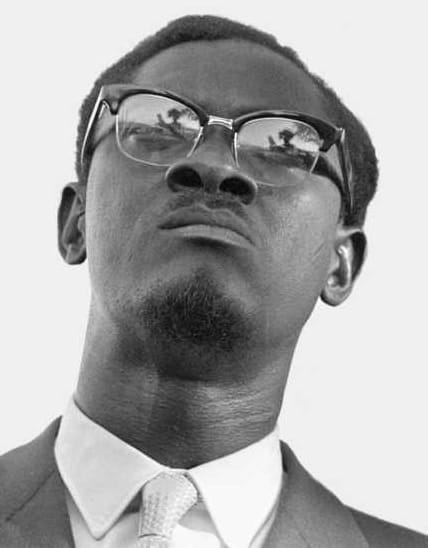
LE DISCOURS DE LUMUMBA LE 30 JUIN 1960:
LA JOURNÉE DU 30 JUIN DISCOURS DE PATRICE LUMUMBA, PREMIER MINISTRE
Congolais et Congolaises, Combattants de l’indépendance aujourd’hui victorieux, Je vous
salue au nom du gouvernement congolais, A vous tous, mes amis, qui avez lutté sans
relâche à nos côtés, je vous demande de faire de ce 30 juin 1960 une date illustre que
vous garderez ineffaçablement gravée dans vos cœurs, une date dont vous enseignerez avec
fierté la signification à vos enfants, pour que ceux-ci à leur tour fassent connaître à
leurs fils et à leurs petits-fils l’histoire glorieuse de notre lutte pour la liberté.
Car cette indépendance du Congo, si elle est proclamée aujourd’hui dans l’entente avec la
Belgique, pays ami avec qui nous traitons d’égal à égal, nul Congolais digne de ce nom ne
pourra jamais oublier cependant que c’est par la lutte qu’elle a été conquise
(applaudissements), une lutte de tous les jours, une lutte ardente et idéaliste, une
lutte dans laquelle nous n’avons ménagé ni nos forces, ni nos privations, ni nos
souffrances, ni notre sang. Cette lutte, qui fut de larmes, de feu et de sang, nous en
sommes fiers jusqu’au plus profond de nous-mêmes, car ce fut une lutte noble et juste,
une lutte indispensable pour mettre fin à l’humiliant esclavage qui nous était imposé par
la force.
Ce que fut notre sort en 80 ans de régime colonialiste, nos blessures sont trop fraîches
et trop douloureuses encore pour que nous puissions les chasser de notre mémoire. Nous
avons connu le travail harassant, exigé en échange de salaires qui ne nous permettaient
ni de manger à notre faim, ni de nous vêtir ou nous loger décemment, ni d’élever nos
enfants comme des êtres chers. Nous avons connu les ironies, les insultes, les coups que
nous devions subir matin, midi et soir, parce que nous étions des nègres. Qui oubliera
qu’à un noir on disait "tu", non certes comme à un ami, mais parce que le
"vous" honorable était réservé aux seuls blancs? Nous avons connu que nos
terres furent spoliées au nom de textes prétendument légaux qui ne faisaient que
reconnaître le droit du plus fort.
Nous avons connu que la loi n’était jamais la même selon qu’il s’agissait d’un blanc ou
d’un noir: accommodante pour les uns, cruelle et inhumaine pour les autres. Nous avons
connu les souffrances atroces des relégués pour opinions politiques ou croyances
religieuses; exilés dans leur propre patrie, leur sort était vraiment pire que la mort
elle-même. Nous avons connu qu’il y avait dans les villes des maisons magnifiques pour
les blancs et des paillotes croulantes pour les noirs, qu’un noir n’était admis ni dans
les cinémas, ni dans les restaurants, ni dans les magasins dit européens; qu’un noir
voyageait à même la coque des péniches, aux pieds du blanc dans sa cabine de luxe.
Qui oubliera enfin les fusillades où périrent tant de nos frères, les cachots où furent
brutalement jetés ceux qui ne voulaient plus se soumettre au régime d’une justice
d’oppression et d’exploitation (applaudissements) (1).
Tout cela, mes frères, nous en avons profondément souffert. Mais tout cela aussi, nous
que le vote de vos représentants élus a agréés pour diriger notre cher pays, nous qui
avons souffert dans notre corps et dans notre cœur de l’oppression colonialiste, nous
vous le disons tout haut, tout cela est désormais fini. La République du Congo a été
proclamée et notre pays est maintenant entre les mains de ses propres enfants. Ensemble,
mes frères, mes sœurs, nous allons commencer une nouvelle lutte, une lutte sublime qui va
mener notre pays à la paix, à la prospérité et à la grandeur. Nous allons établir
ensemble la justice sociale et assurer que chacun reçoive la juste rémunération de son
travail (applaudissements).
Nous allons montrer au monde ce que peut faire l’homme noir quand il travaille dans la
liberté et nous allons faire du Congo le centre de rayonnement de l’Afrique tout entière.
Nous allons veiller à ce que les terres de notre patrie profitent véritablement à ses
enfants. Nous allons revoir toutes les lois d’autrefois et en faire de nouvelles qui
seront justes et nobles. Nous allons mettre fin à l’oppression de la pensée libre et
faire en sorte que tous les citoyens jouissent pleinement des libertés fondamentales
prévues dans la déclaration des Droits de l’Homme (applaudissements). Nous allons
supprimer efficacement toute discrimination quelle qu’elle soit et donner à chacun la
juste place que lui vaudra sa dignité humaine, son travail et son dévouement au pays.
Nous allons faire régner non pas la paix des fusils et des baïonnettes, mais la paix des
cœurs et des bonnes volontés (applaudissements).
Et pour tout cela, chers compatriotes, soyez sûrs que nous pourrons compter non seulement
sur nos forces énormes et nos richesses immenses, mais sur l’assistance de nombreux pays
étrangers dont nous accepterons la collaboration chaque fois qu’elle sera loyale et ne
cherchera pas à nous imposer une politique quelle qu’elle soit (applaudissements). Dans
ce domaine, la Belgique qui, comprenant enfin le sens de l’histoire, n’a pas essayé de
s’opposer à notre indépendance, est prête à nous accorder son aide et son amitié, et un
traité vient d’être signé dans ce sens entre nos deux pays égaux et indépendants. Cette
coopération, j’en suis sûr, sera profitable aux deux pays.
De notre côté, tout en restant vigilants, nous saurons respecter les engagements
librement consentis. Ainsi, tant à l’intérieur qu’à l’extérieur, le Congo nouveau, notre
chère République que mon gouvernement va créer, sera un pays riche, libre et prospère.
Mais pour que nous arrivions sans retard à ce but, vous tous, législateurs et citoyens
congolais, je vous demande de m’aider de toutes vos forces. Je vous demande à tous
d’oublier les querelles tribales qui nous épuisent et risquent de nous faire mépriser à
l’étranger. Je demande à la minorité parlementaire d’aider mon gouvernement par une
opposition constructive et de rester strictement dans les voies légales et démocratiques.
Je vous demande à tous de ne reculer devant aucun sacrifice pour assurer la réussite de
notre grandiose entreprise. Je vous demande enfin de respecter inconditionnellement la
vie et les biens de vos concitoyens et des étrangers établis dans notre pays. Si la
conduite de ces étrangers laisse à désirer, notre justice sera prompte à les expulser du
territoire de la République; si par contre leur conduite est bonne, il faut les laisser
en paix, car eux aussi travaillent à la prospérité de notre pays. L’indépendance du Congo
marque un pas décisif vers la libération de tout le continent africain
(applaudissements).
Voilà, Sire, Excellences, Mesdames, Messieurs, mes chers compatriotes, mes frères de
race, mes frères de lutte, ce que j’ai voulu vous dire au nom du gouvernement en ce jour
magnifique de notre indépendance complète et souveraine (applaudissements). Notre
gouvernement fort, national, populaire, sera le salut de ce pays. J’invite tous les
citoyens congolais, hommes, femmes et enfants, à se mettre résolument au travail en vue
de créer une économie nationale prospère qui consacrera notre indépendance économique.
Hommage aux combattants de la liberté nationale ! Vice l’indépendance de l’Unité
africaine! Vive le Congo indépendant et souverain! (Applaudissements prolongés).
Wednesday, June 9, 2010
As the UN leaves Issues Arise
A state-within-a-state controlled by former Congolse-Tutsi rebels, is emerging in the east of the Democratic Republic of Congo once controlled by the Hutu perpetrators of the 1994 Rwanda genocide, raising the chances of renewed violence in the Great Lakes region.
The mini state now run by former rebels of Congolese-Tutsi known as the CNDP collect taxes, appoint local officials and man border posts. A flag now wavers from atop a hill signifying self-government.
According to reports, the CNDP have allowed at least 60,000 people across the border from Rwanda in recent months leading residents in the region to describe the situation as an invasion by Rwanda.
"The situation is explosive in Masisi [one of the districts under the new flag]. I am not really optimistic that this can be resolved without conflict,” Vice president of the provincial assembly based in Goma, Jean Baumbiliya Kisoloni said.
The provincial coordinator of the National Commission for Refugees, Laingulia Njewa, told news reporters that many of the newcomers might be not refugees but rather economic migrants, abandoning their tiny, overpopulated state in search of, literally, greener pastures. United Nations officials, legislators and traditional chiefs are already forming pacification committees to try and resolve the rising tensions.
Refugees International (RI) revealed that people from Rwanda are "attempting to pass themselves off as Congolese refugee returnees and arriving to areas under the protection of the CNDP, adding to the frictions that are rising." In a manifesto published after his 2009 capture, former CNDP leader Laurent Nkunda said that without colonization, today’s Congo would not exist and his Congolese home district would be part of Rwanda.
The RI report also found that large farms are being established in the area through heavy taxation and threats of violence to drive out land owners. It also said there were reports of armed herders in Masisi serving as a militia.
After the 1994 genocide, Hutu extremists fled to east Congo and took control of Masisi, the land now in dispute. The over 54,000 Congolese Tutsis in Masisi at the time fled to Rwanda because Masisi was to be declared a "Hutuland."
The Congolese government had failed to facilitate the return of the Congolese Tutsis who were forced to flee Masisi into Rwanda. According to experts, this failure led to the formation of a Congolese Tutsi rebellion known as the CNDP, who wanted their parents to return to Masisi from Rwanda. The rebellion led by General Laurent Nkunda eventually reclaimed Masisi. The CNDP tripled the size of Masisi to include lucrative mines and tens of thousands of acres of land.
"What’s going on here now [in Masisi] is boiling under the surface, a calm before the storm, and when it explodes ...," Camilla Olson of Refugees International was quoted by AFP.
Congolese Tutsi rebel leader, Gen. Nkunda was arrested in 2009 and a peace agreement was signed between Rwanda and Congo. But The CNDP says it will not dismantle its "parallel administration" until the Congolese government fulfills its part of the peace accord by organizing the return of the refugees and giving Congolese Tutsis positions in the government.
The U.N. refugee agency has taken names of thousands of new arrivals from Rwanda but is unable to match them to names of refugees registered in Rwandan camps, and has vowed to repatriate the 54,000 Congolese Tutsi refugees registered with the U.N. in Rwanda. Karl Steinacker of the U.N. High Commissioner for Refugees has been unable to explain the origins of some "undocumented" people crossing from Rwanda.
Contribution from Scott Morgan and Afrik.com
The mini state now run by former rebels of Congolese-Tutsi known as the CNDP collect taxes, appoint local officials and man border posts. A flag now wavers from atop a hill signifying self-government.
According to reports, the CNDP have allowed at least 60,000 people across the border from Rwanda in recent months leading residents in the region to describe the situation as an invasion by Rwanda.
"The situation is explosive in Masisi [one of the districts under the new flag]. I am not really optimistic that this can be resolved without conflict,” Vice president of the provincial assembly based in Goma, Jean Baumbiliya Kisoloni said.
The provincial coordinator of the National Commission for Refugees, Laingulia Njewa, told news reporters that many of the newcomers might be not refugees but rather economic migrants, abandoning their tiny, overpopulated state in search of, literally, greener pastures. United Nations officials, legislators and traditional chiefs are already forming pacification committees to try and resolve the rising tensions.
Refugees International (RI) revealed that people from Rwanda are "attempting to pass themselves off as Congolese refugee returnees and arriving to areas under the protection of the CNDP, adding to the frictions that are rising." In a manifesto published after his 2009 capture, former CNDP leader Laurent Nkunda said that without colonization, today’s Congo would not exist and his Congolese home district would be part of Rwanda.
The RI report also found that large farms are being established in the area through heavy taxation and threats of violence to drive out land owners. It also said there were reports of armed herders in Masisi serving as a militia.
After the 1994 genocide, Hutu extremists fled to east Congo and took control of Masisi, the land now in dispute. The over 54,000 Congolese Tutsis in Masisi at the time fled to Rwanda because Masisi was to be declared a "Hutuland."
The Congolese government had failed to facilitate the return of the Congolese Tutsis who were forced to flee Masisi into Rwanda. According to experts, this failure led to the formation of a Congolese Tutsi rebellion known as the CNDP, who wanted their parents to return to Masisi from Rwanda. The rebellion led by General Laurent Nkunda eventually reclaimed Masisi. The CNDP tripled the size of Masisi to include lucrative mines and tens of thousands of acres of land.
"What’s going on here now [in Masisi] is boiling under the surface, a calm before the storm, and when it explodes ...," Camilla Olson of Refugees International was quoted by AFP.
Congolese Tutsi rebel leader, Gen. Nkunda was arrested in 2009 and a peace agreement was signed between Rwanda and Congo. But The CNDP says it will not dismantle its "parallel administration" until the Congolese government fulfills its part of the peace accord by organizing the return of the refugees and giving Congolese Tutsis positions in the government.
The U.N. refugee agency has taken names of thousands of new arrivals from Rwanda but is unable to match them to names of refugees registered in Rwandan camps, and has vowed to repatriate the 54,000 Congolese Tutsi refugees registered with the U.N. in Rwanda. Karl Steinacker of the U.N. High Commissioner for Refugees has been unable to explain the origins of some "undocumented" people crossing from Rwanda.
Contribution from Scott Morgan and Afrik.com
Subscribe to:
Posts (Atom)


